


WASHINGTON (CN) - Reversing a lower court, the Supreme Court on Thursday ruled in favor of a Delaware-based company's lawsuit against cruise giants for profiting off property stolen by the Cuban government.
In an 8-1 ruling, the court held that Havana Docks Company had a sufficient property interest in piers used by Carnival Corporation and others under the Cuban Liberty and Democratic Solidarity, or LIBERTAD Act.
"The act generally makes those who use property tainted by a past confiscation liable to any United States national who owns a claim to that property ... Havana Docks had to prove only that the cruise lines used confiscated property - such as the docks - to which Havana Docks owns a claim," Justice Clarence Thomas, a George H.W. Bush appointee, wrote for the majority.
Justice Elena Kagan, a Barack Obama appointee, penned a solo dissent. She said the court misconstrues the statute to allow Havana to recover damages for property that was not theirs.
"The docks are not 'property which was confiscated by the Cuban Government' because they were not, in fact, confiscated by the Cuban government; rather, Cuba owned the docks all along," Kagan wrote.
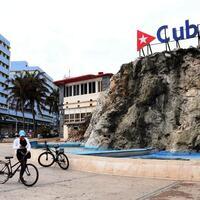
Under the leadership of Fidel Castro, the Cuban government confiscated all U.S. property on the island in 1960, igniting a total trade embargo that only briefly thawed once over six decades.
Congress enacted the Cuban Claims Act creating a pathway for U.S. nationals to recoup the value of their seized property. The Foreign Claims Settlement Commission, an agency housed within the Department of Justice, certified thousands of claims against the Cuban government, but there were no Cuban assets in the U.S. to satisfy those claims.
In 1996, Congress passed the LIBERTAD Act - also known as the Helms-Burton Act - as a solution. Along with harsher sanctions, the law allowed U.S. nationals to go after companies working with the Cuban government to profit off their stolen goods. But it took two decades for a president to wield the legislation.
Every six months between 1996 and 2018, U.S. presidents acted to suspend the provision, but former Secretary of State Mike Pompeo announced that it would go into effect in 2019. President Donald Trump released U.S. companies to seek compensation against foreign corporations that coordinated with the Cuban government to traffic their confiscated goods.
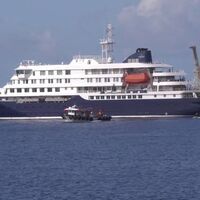
Havana Docks responded with a suit against Carnival Corporation, a Panamanian company, for utilizing its piers for cruise visits between 2016 and 2019. A lower court dismissed the suit, however, finding Havana no longer had ownership over the property.
The Supreme Court disagreed. Although Havana Docks' time-limited interest expired in 2004 - a decade before the cruise lines used the docks - Thomas said any use of confiscated property met the standard to bring a claim.
"'[P]roperty which was confiscated' can refer to the physical property in which the plaintiff had an interest when the Cuban government 'seiz[ed] ... control of' it after Jan. 1, 1959," Thomas wrote. "Knowingly and intentionally 'traffic[king]' in that physical property by, for example, using it, can lead to liability under the act."
Kagan said the majority's view ignored basic principles of property law taught to every first-year law student. She argued property should be defined by reference to not just spatial boundaries but also temporal ones.
"At the end of the day, the court's interpretation of Title III treats all property interests as if they were perpetual ones," Kagan wrote. "Like the 11th Circuit, I 'do not believe that Congress, in enacting Title III, meant to convert property interests which were temporally limited at the time of their confiscation into fee simple interests in perpetuity such that the holders of such limited interests could assert trafficking claims through what Buzz Lightyear called 'infinity and beyond.''"
Justice Sonia Sotomayor, another Obama appointee, wrote a concurring opinion addressing possible issues when the case returns to the lower courts for further proceedings. Sotomayor said Havana Docks' broad arguments would allow the company to recover $110 million from every person who uses the docks in any way.
"This limitless reading of the statute could permit petitioner to recover millions, if not billions, of dollars over and over again, so long as anyone continues to make any commercial use of the docks," Sotomayor, joined by Justice Brett Kavanaugh, a Trump appointee, wrote. "It is unlikely that Congress intended for someone who suffered a finite loss to reap infinite recoveries."
Sotomayor said that the Obama administration's positions could also complicate Havana Docks' case. She said there would be due process concerns with holding the cruises liable for conduct that government officials said was lawful.
Source: Courthouse News Service